Metallurgy Steel Industry
The metallurgy and steel industry is one of the most demanding industrial sectors for fluid handling systems. It involves extreme operating conditions such as very high temperatures, abrasive media (like slag and slurry), corrosive gases, steam, cooling water, and chemically aggressive solutions. In such environments, valves play a critical role in ensuring safe operation, process stability, and energy efficiency.
Valves used in steel plants must withstand thermal cycling, mechanical wear, oxidation, and corrosion while maintaining reliable shut-off and flow control performance. For this reason, many valves used in metallurgy facilities are designed according to international standards developed by the API, as well as ASME, ISO, and EN standards.
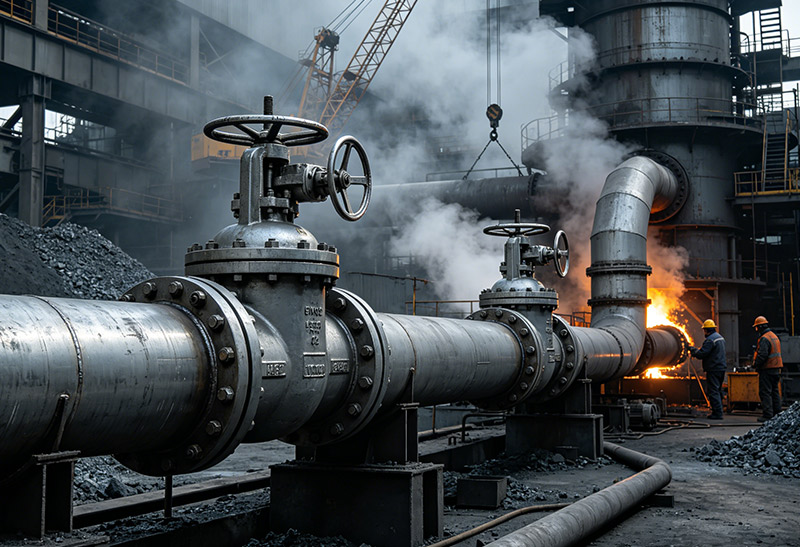
1. Importance of Valves in Metallurgy and Steel Industry
In steel manufacturing, valves are used in nearly every stage of production:
· Blast furnace operations
· Coke oven gas systems
· Steel refining (BOF and EAF processes)
· Continuous casting systems
· Cooling water circulation
· Dust and gas treatment systems
· Hydraulic and pneumatic control systems
These processes require precise flow control of gases, molten materials, steam, water, and chemicals. Any valve failure can result in production downtime, safety hazards, or equipment damage.
2. Common API Valve Types Used in Steel Plants
Several API-standard valve types are widely used in metallurgy applications due to their reliability and performance under severe conditions.
2.1 Gate Valves
Gate valves are primarily used for isolation service in high-pressure and high-temperature pipelines.
Applications include:
· Blast furnace gas pipelines
· Steam distribution systems
· Cooling water isolation lines
They provide minimal flow resistance when fully open and are suitable for on/off operation in large pipelines.
2.2 Globe Valves
Globe valves are widely used for flow regulation and throttling.
Applications include:
· Steam control systems
· Gas regulation lines
· Chemical injection systems
Their design allows precise flow adjustment, making them suitable for process control in steel production.
2.3 Ball Valves
Ball valves are used for quick shut-off and tight sealing.
Applications include:
· Fuel gas systems
· Hydraulic control lines
· Emergency shut-off systems
They are especially valuable in automated steel plants due to fast operation and low maintenance.
2.4 Check Valves
Check valves prevent backflow and protect equipment.
Applications include:
· Pump discharge systems
· Cooling water circuits
· Compressor protection lines
They ensure unidirectional flow in critical industrial systems.
2.5 Butterfly Valves
Butterfly valves are used in large-diameter pipelines with low pressure.
Applications include:
· Cooling water systems
· Air and gas distribution networks
· Dust collection systems
Their compact design makes them suitable for space-limited steel plant layouts.
3. API Standards Used in Metallurgy Industry
The metallurgy sector relies heavily on internationally recognized standards to ensure safety and reliability. Key standards from the API include:
API 600
· Steel gate valves with bolted bonnet design
· Used in high-pressure isolation systems
API 602
· Forged steel gate, globe, and check valves
· Used in compact, high-pressure pipelines
API 608
· Metal ball valves for industrial service
API 594
· Check valve standards (swing and dual plate types)
API 598
· Testing and inspection requirements for valves
API 607 / API 6FA
· Fire-safe testing standards for valve performance
These standards ensure valves can operate safely in high-temperature steel production environments.
4. Materials Used in Metallurgy Valves
Material selection is one of the most important factors in valve performance in steel plants. Valves must resist heat, corrosion, abrasion, and mechanical stress.
4.1 Carbon Steel
· Common grades: ASTM A216 WCB
· Used in general-purpose applications
· Suitable for moderate temperature and pressure
Applications:
· Cooling water systems
· Steam lines (non-critical)
4.2 Forged Steel
· Common grades: ASTM A105, A182
· High strength and durability
· Excellent for high-pressure systems
Applications:
· High-pressure steam
· Gas pipelines
· Hydraulic systems
4.3 Stainless Steel
· Grades: 304, 316, CF8, CF8M
· Excellent corrosion resistance
Applications:
· Chemical injection systems
· Cooling water systems
· Corrosive gas handling
4.4 Alloy Steel
· Includes chrome-moly steels (e.g., F11, F22)
· High temperature resistance
Applications:
· Superheated steam systems
· Furnace-related piping
4.5 High-Temperature Special Alloys
· Inconel, Hastelloy, duplex stainless steel
· Extremely high corrosion and heat resistance
Applications:
· Aggressive chemical environments
· High-temperature oxidation zones
· Slag and dust-heavy systems
4.6 Wear-Resistant Materials
In metallurgy plants, abrasion is a major issue due to dust, slag, and particulates. Hard-faced materials such as Stellite or tungsten carbide coatings are often used in valve seats and sealing surfaces.
5. Key Applications in Steel Industry Systems
5.1 Blast Furnace Systems
Valves control hot air blast, gas flow, and cooling systems. High-temperature gate and butterfly valves are commonly used.
5.2 Coke Oven Gas Systems
Ball valves and gate valves manage toxic and flammable gases, requiring tight sealing and fire-safe design.
5.3 Steel Refining (BOF/EAF)
Globe valves and control valves regulate oxygen, argon, and other process gases.
5.4 Continuous Casting Systems
Valves regulate cooling water flow to molds and rollers, ensuring proper solidification of molten steel.
5.5 Dust and Gas Cleaning Systems
Butterfly and check valves are used in dust collectors and exhaust gas treatment systems.
6. Design Requirements for Metallurgy Valves
Valves used in steel plants must meet strict performance requirements:
· High temperature resistance
· Abrasion resistance
· Corrosion protection
· Fire-safe design
· Reliable sealing under pressure cycling
· Easy maintenance and replacement
Automation is also widely used. Pneumatic and electric actuators allow remote control of valves in hazardous or high-temperature zones.
7. Importance of Standards Compliance
Compliance with API standards ensures:
· Safe operation under extreme conditions
· Interchangeability of valve components
· Reliable performance in critical systems
· Reduced maintenance and downtime
Standards from the API also help unify global industrial practices, allowing steel plants to source reliable valve systems internationally.
The metallurgy and steel industry depends heavily on advanced valve technologies to maintain safe and efficient production under extreme conditions. API-standard valves such as gate, globe, ball, check, and butterfly valves are widely used across different stages of steel manufacturing.
With proper material selection—including carbon steel, stainless steel, alloy steel, and high-performance special alloys—valves can withstand the harsh environments of high temperature, corrosion, and abrasion.
By following strict international standards from the API, steel plants ensure long-term operational safety, improved efficiency, and reduced maintenance risks, making valves a critical component of modern metallurgy systems.
NEXT: Water Treatment Systems
PREV: Offshore Platforms