Oil And Natural Gas Transmission
Oil and gas transmission pipelines are large-scale transportation systems designed to move crude oil, refined petroleum products, and natural gas safely and efficiently from production fields to refineries, processing plants, storage terminals, and distribution networks. As the backbone of the global energy supply chain, these pipelines provide a continuous, economical, and environmentally responsible means of transporting energy resources over long distances.
A transmission pipeline typically consists of high-strength steel pipes, compressor or pumping stations, block valve stations, metering systems, monitoring equipment, and control systems. Crude oil is transported using pumping stations that maintain the required flow and pressure, while natural gas pipelines utilize compressor stations to overcome pressure losses and sustain gas movement. Modern pipeline systems are equipped with advanced Supervisory Control and Data Acquisition (SCADA) systems, leak detection technologies, and automatic shut-off valves to enhance operational safety and efficiency.
Pipeline design considers factors such as operating pressure, temperature, fluid characteristics, terrain, environmental conditions, and applicable international standards. High-performance valves play a critical role by providing reliable isolation, flow regulation, emergency shutdown, and backflow prevention.
Compared with road, rail, or marine transportation, transmission pipelines offer lower operating costs, higher transportation capacity, improved safety, and reduced environmental impact. Consequently, they remain the preferred infrastructure for delivering oil and natural gas to industrial users, power plants, commercial facilities, and residential consumers worldwide.
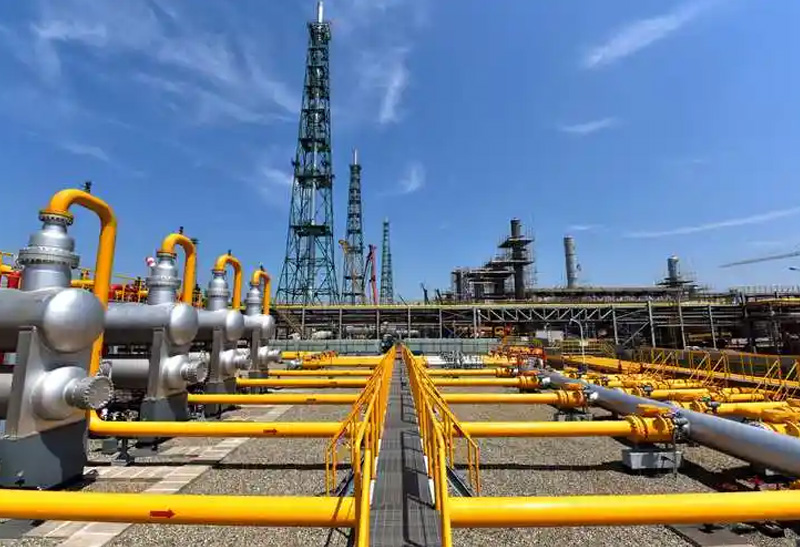
Specific Applications of Oil and Gas Transmission Pipelines
Oil and gas transmission pipelines are essential components of the global energy infrastructure, providing a safe, efficient, and cost-effective means of transporting hydrocarbons over long distances. They connect production fields, processing facilities, storage terminals, and end users, ensuring a continuous supply of energy to industries and communities.
Crude Oil Transportation: Transmission pipelines transport crude oil from onshore and offshore production fields to refineries, where it is processed into gasoline, diesel, jet fuel, lubricants, and other petroleum products. These pipelines operate continuously, reducing transportation costs compared with road or rail.
Natural Gas Transmission: High-pressure gas pipelines deliver natural gas from gas processing plants to regional distribution networks, industrial facilities, power plants, and residential areas. Compressor stations installed along the pipeline maintain the required pressure and flow rate.
Refined Petroleum Products: Dedicated pipelines transport refined products such as gasoline, diesel, aviation fuel, and liquefied petroleum gas (LPG) from refineries to storage depots, fuel terminals, airports, and distribution centers, ensuring product quality and minimizing contamination.
Liquefied Natural Gas (LNG) Facilities: Pipelines are used within LNG terminals to transfer natural gas between processing units, liquefaction plants, storage tanks, and loading facilities. Specialized cryogenic pipelines and valves are required to handle extremely low temperatures.
Cross-Country and International Pipelines: Large-diameter transmission pipelines transport oil and natural gas across regions and national borders, supporting international energy trade and enhancing energy security.
Industrial and Power Generation Supply: Pipelines provide a stable supply of natural gas and fuel oil to petrochemical plants, steel mills, fertilizer factories, cement plants, and thermal power stations, enabling continuous industrial production and electricity generation.
Throughout these applications, high-performance valves—including gate valves, ball valves, check valves, plug valves, and butterfly valves—are installed at pumping stations, compressor stations, block valve stations, and terminal facilities to provide reliable isolation, flow control, emergency shutdown, and backflow prevention, ensuring the safety, efficiency, and long-term reliability of oil and gas transmission systems.
Types and Standards of Valves for Oil and Gas Transmission Pipelines
Oil and gas transmission pipelines require high-performance valves that ensure safe isolation, reliable flow control, and long-term operation under high-pressure and demanding environmental conditions. The selection of valve types depends on the pipeline medium, operating pressure, temperature, and service requirements.
Gate Valves are the most commonly used isolation valves in transmission pipelines. They provide full-bore flow with minimal pressure loss and are ideal for on/off service. API 600 gate valves are widely applied in processing facilities, while API 6D gate valves are specifically designed for pipeline applications.
Ball Valves are preferred for pipeline isolation because they offer quarter-turn operation, tight shut-off, low operating torque, and fast emergency closure. API 6D ball valves are extensively used in crude oil, natural gas, and LNG transmission systems.
Plug Valves, manufactured in accordance with API 599, are suitable for quick shut-off applications and can handle viscous fluids, corrosive media, and services requiring bubble-tight sealing. They are often installed in terminal facilities and auxiliary pipeline systems.
Butterfly Valves, designed to API 609, are commonly used in low- and medium-pressure services, water systems, cooling systems, and large-diameter pipelines where lightweight construction and compact design are advantageous.
Check Valves prevent reverse flow and protect pumps, compressors, and other critical equipment. Swing check valves, dual plate check valves, and axial flow check valves are widely used throughout pipeline systems.
Several internationally recognized standards govern the design, manufacturing, testing, and inspection of pipeline valves. API 6D is the primary standard for pipeline valves, covering gate, ball, check, and plug valves used in oil and natural gas transmission. API 600 specifies cast steel gate valves, while API 603 covers corrosion-resistant stainless steel gate valves. API 599 applies to metal plug valves, and API 609 establishes requirements for butterfly valves. In addition, standards such as ASME B16.34, ASME B16.5, ASME B16.10, ISO 5208, API 598, and NACE MR0175/ISO 15156 ensure valve pressure integrity, flange dimensions, face-to-face dimensions, inspection, testing, sealing performance, and material suitability for sour service environments. These standards guarantee the safety, reliability, and interoperability of valves used in modern oil and gas transmission pipeline systems.